La Famille Boutrais

The Oysters

Three ranges, born of our terroirs.

01 / 03

Ostra Regal

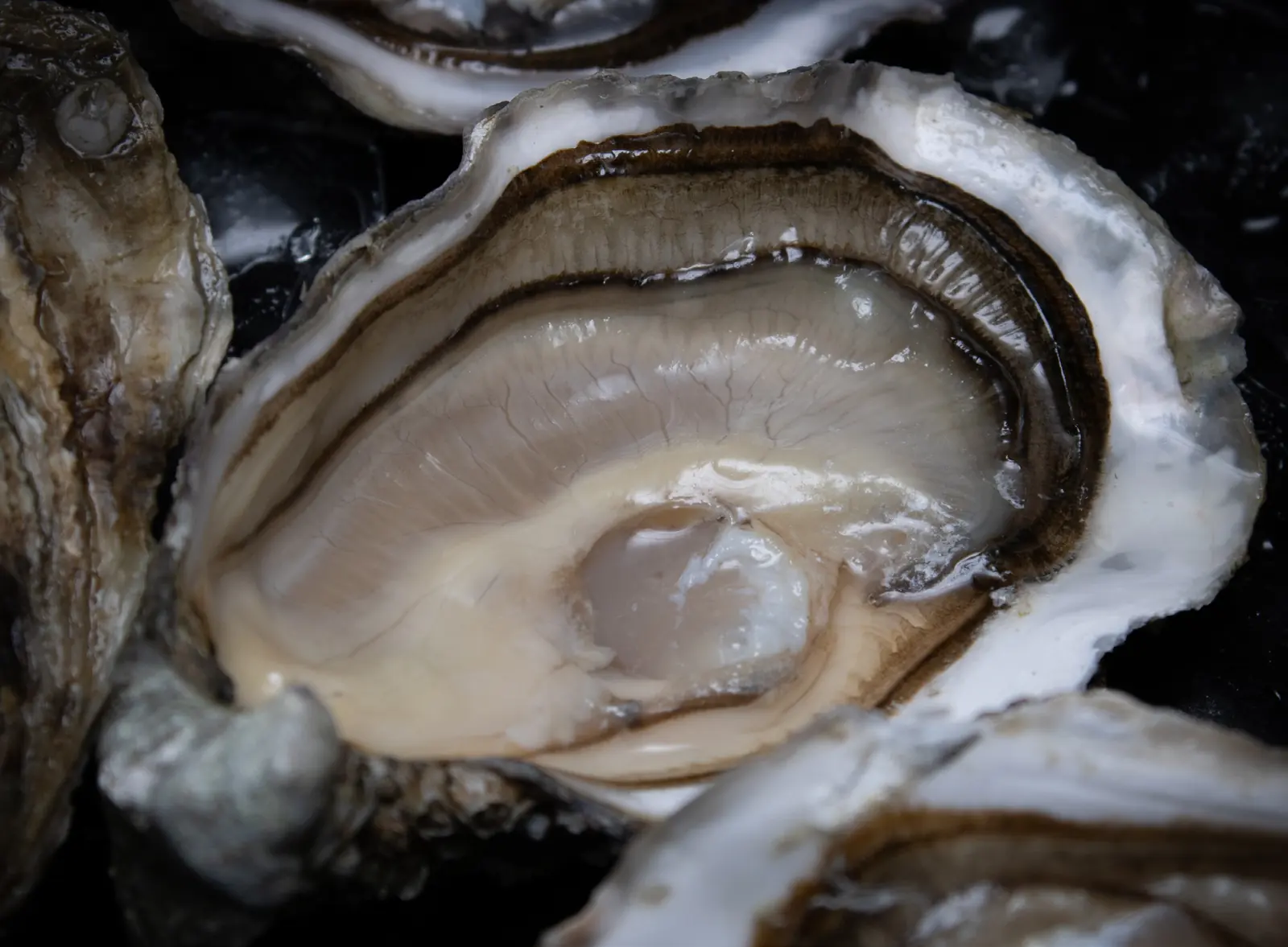
A taste between sweet and salty, at the frontier of land and sea; generous flesh, in a robust, dark, teardrop-shaped shell. Up to four years of rearing: about two years at Clew Bay, then eighteen to twenty-four months in the conche of Bannow.

Discover →
02 / 03

Céline

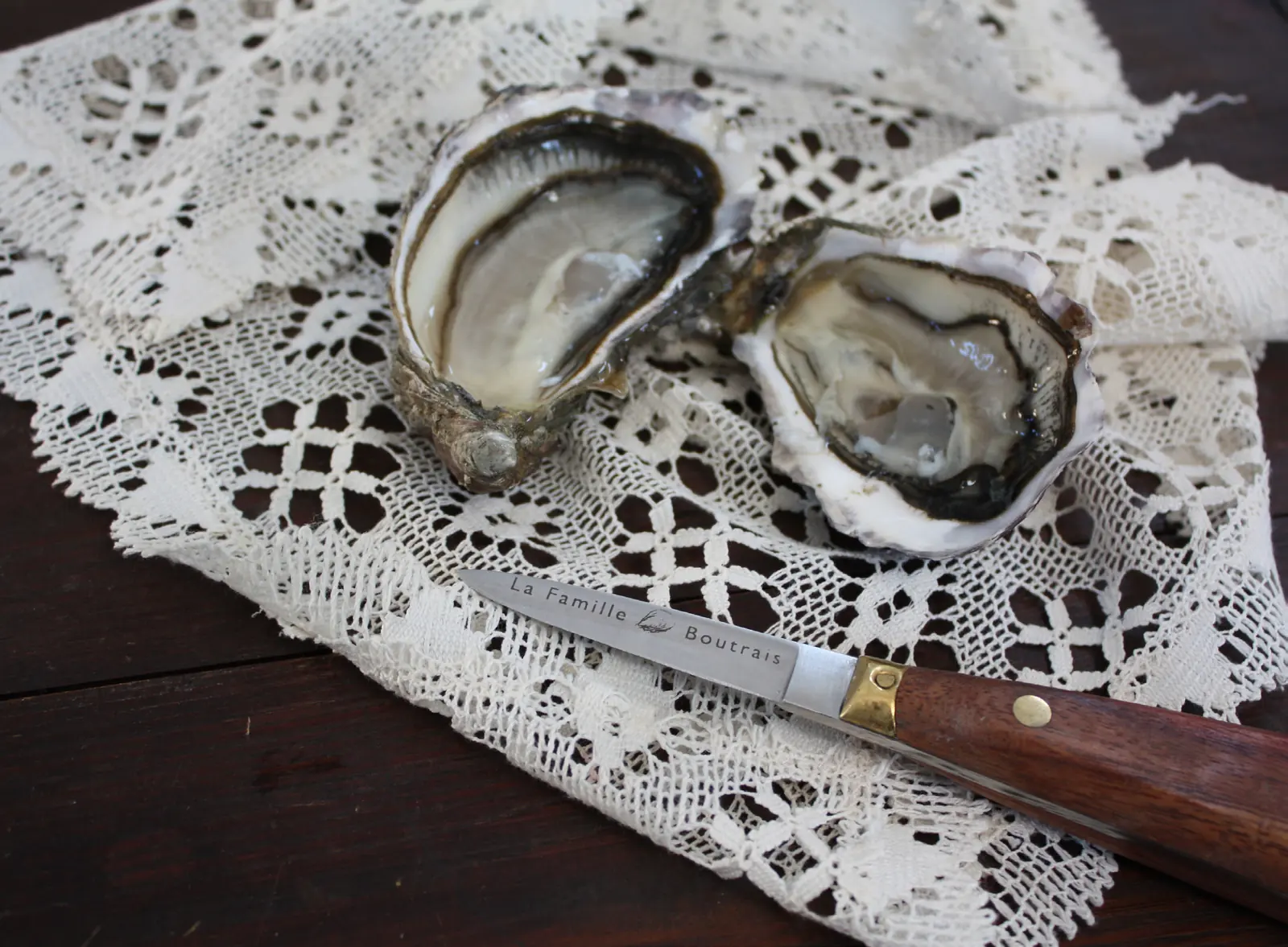
A briny, fleshy oyster, under a name born of several generations of Cancale oyster farmers. It is supplied in part by our production in the bay of Mont-Saint-Michel and may bring together several origins.*

* “Huître de Céline” is a widely distributed brand that may bring together several origins. The seasonality of oyster farming and the bay's great tidal range do not allow us to guarantee a 100% bay of Mont-Saint-Michel origin for this brand. To make up for occasional production shortfalls, we sometimes supply it with oysters of similar organoleptic properties from Ireland, Jersey and France.

Discover →

03 / 03

Sentinelle

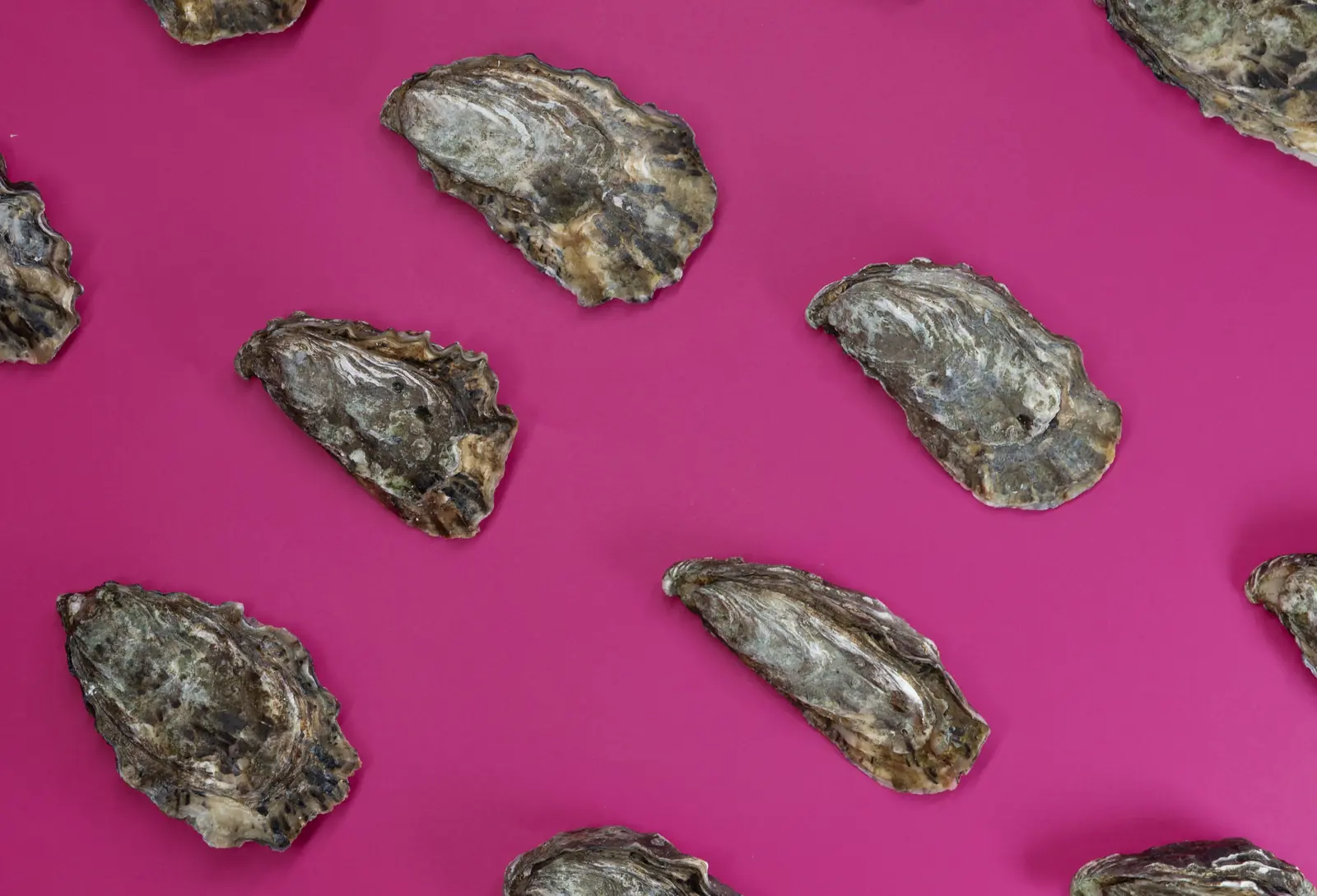
A very fleshy oyster, more briny than sweet, with a round, polished, hard shell. It comes mainly from Trawenagh Bay.

Discover →

From the house's catalogue

Classification by flesh ratio

The quality of an oyster is read from its flesh index: the percentage of flesh in the total weight of the oyster.

From it follow three categories, used across the trade for all cupped oysters.

Graded scale of the flesh ratio of cupped oysters: three increasingly deep bands — fine, spéciale, super-spéciale — separated by two graduations, at ten and at fifteen per cent, the last band left open.
  1. FineFrom 5% flesh.A marked briny taste, with little flesh.
  2. SpécialeAbove 10% flesh.Selected by the oyster farmer and raised for longer, it carries more flesh.
  3. Super-spécialeAbove 15% flesh.A spéciale whose flesh ratio crosses the second threshold.

From the house's catalogue

The calibres

The calibre tells the size and the weight of the oyster. For cupped oysters it runs from 0 to 5: the smaller the number, the larger and heavier the oyster.

The n°3 and n°2 are the most common: they offer a compromise between size and fleshy texture.

Calibres of the fine oyster
CalibreWeight of the oyster
n°530 g to 45 g
n°446 g to 60 g
n°361 g to 100 g
n°2101 g to 130 g
n°1131 g to 150 g
n°0More than 151 g
Calibres of the spéciale oyster
CalibreWeight of the oyster
n°550 g to 64 g
n°465 g to 75 g
n°376 g to 107 g
n°3+108 g to 115 g
n°2116 g to 135 g
n°1136 g to 180 g
n°0More than 181 g

From the house's catalogue

The art of tasting

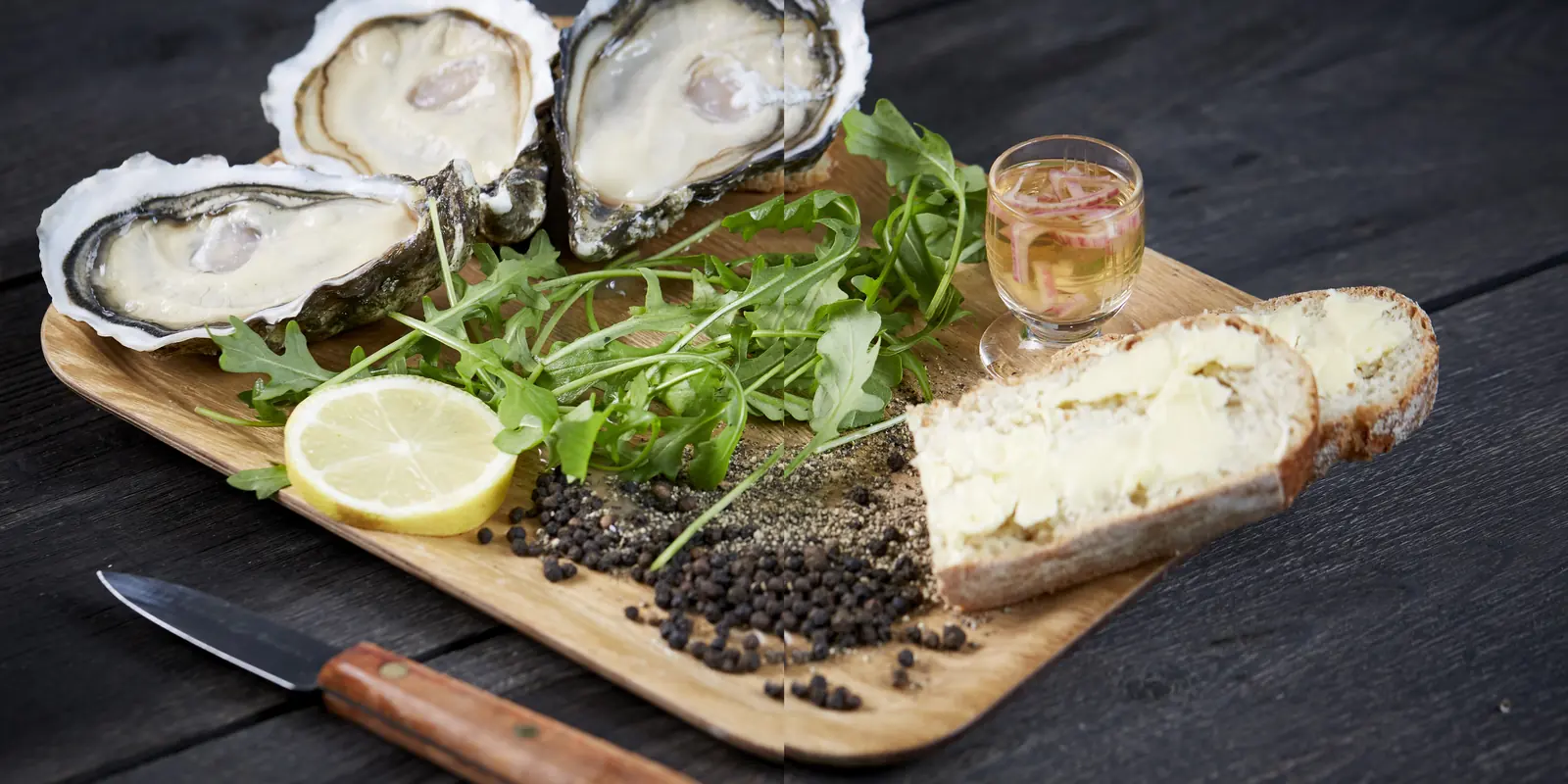
To enjoy all the flavours of our oysters, taste them first raw and plain.

Keep the oyster in your mouth and chew the flesh, the better to appreciate its taste and its length.

If its flavour is not enough for you, a few spices and citrus fruits will enhance the tasting.

Traditionally we pair oysters with a dry white wine; champagne is a less conventional match.

Open oysters, bread, lemon and rocket on a wooden board, beside an oyster knife.

Accompaniments

  • Vinegar and shallot pearls

    Small gelled pearls: a balanced first taste between the smell of the sea, bitterness and acidity.

  • Oyster pepper

    A blend of crushed peppers, which lifts the briny taste of a fine oyster.

  • Finger lime

    Small translucent, crisp beads, whose texture brings out the flavour of the oyster.

  • Caviar

    A small teaspoon laid on the oyster: buttery, delicate flavours.

Wines

  • A blanc de blancs champagne

    It marries the flavours of the Sélection Or oyster.

  • A natural white wine

    It goes with the sweetness of the Ostra Regal oyster.

    Discover →
  • A Riesling

    It goes with the scents of the Sentinelle oyster.

    Discover →
  • A Chablis

    It brings out the briny flavour of the fine oysters of Cancale.